


 Alexis · Fondateur d'YVY Maté

For newcomers, it can be unsettling.
For enthusiasts, it's pure joy.
Every yerba mate has its own personality: some are herbal, others smoky, more or less bitter, sometimes smooth or earthy.
Let's explore mate's different taste profiles together.
So, what does mate taste like? How can you soften the drink? And what are the different types of mate?
The taste of mate
Mate's taste is unique, sometimes hard to describe. Like coffee, wine or black tea, it's a taste you discover over time.
A taste that needs taming
On first tasting, mate can seem bitter, even disconcerting. But don't worry: the palate adapts. The more you drink, the more you begin to pick out its subtleties.
Some people love it from the very first sips; others need a few tries. One thing is certain: it's a drink you have to earn — and it repays you well!
Why can mate be bitter?
Mate's bitterness depends on many factors:
The yerba variety
The way it is grown
The timing of the harvest
The grower's know-how
For example, a yerba harvested before maturity and grown in full sun will be much more bitter.
To learn more about the factors that shape mate's taste, we have a full article on the subject!
An organic mate, smooth and balanced
Our organic mate is grown in agroforestry, in the shade of the trees, in the heart of biodiversity.
Harvested at maturity, every two years, it naturally develops smoother, sweeter aromas.
The result: a mate with a round taste and a long finish, with beautiful aromatic complexity.
The 3 types of mate
There are three main types of yerba mate, each with a distinct taste profile.

The three different types of mate
Green Mate
Green mate is freshly harvested yerba. This yerba is very smooth, very fresh and herbal. In taste it comes close to a green tea in its softness, yet stands apart through notes that belong to mate alone.
Aged Mate
Aged mate can be aged from 3 to 24 months. As with a wine, a cheese or a cured meat, the longer the aging, the more the flavors concentrate and move away from the taste of green mate.
We age our yerba for 24 months to achieve a fine bitterness and balanced sweetness, offset by measured acidity, with a nutty finish.
Roasted Mate
Roasted mate departs drastically from the previous two types. Like coffee or cocoa, the leaves are roasted following a specific recipe. Roasting time greatly influences the final flavor - the roast must be mastered to perfection to draw the best from the leaves.
Roasting gives the brew a taste that sits literally between a coffee and a tea: you'll find the strength and the toasted, caramelized notes typical of coffee, balanced by the soft mouthfeel of a tea. Some even pick out notes of smoked tea.
Want to compare all three profiles? Discover our Green Mate, our Aged Mate and our Roasted Mate.
The different ways to drink mate — and their impact on taste
The preparation method and the vessel used directly influence mate's taste. Depending on the method you choose, the brew will be more or less intense, smoother or bolder.
Mate in a gourd: the most authentic experience
Drinking mate the traditional way, in a natural gourd (often crafted from a dried squash), offers a rich, evolving taste experience.
Why? Because the gourd itself brings a light woody or earthy flavor that rounds out the yerba's aromatic profile.
What's more, when you drink your mate over several successive refills, the drink naturally mellows. The first sips are intense, concentrated, sometimes bitter. Then, refill after refill, the yerba releases its subtler, rounder, more balanced aromas.
👉 Beginner's tip: you can spit out the first 2 or 3 sips if you find the bitterness too strong. It's a common practice among enthusiasts discovering powerful yerbas.

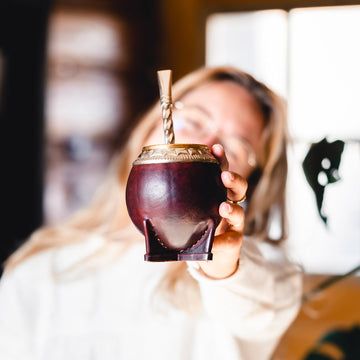
A mate gourd
Mate in a teapot or tea bag: a gentler brew
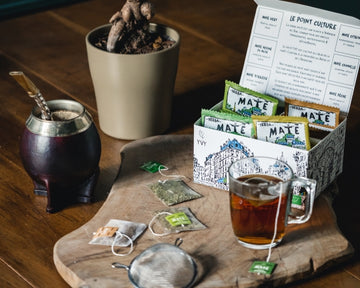
If you prefer a simpler approach, you can brew mate like a classic tea, with a tea bag or loose-leaf, in a teapot or infuser. You'll get:
- A lighter taste
- A more controlled brew
- Easy dosing and flavoring
This method gives a less bold drink, ideal for beginners or anyone sensitive to bitterness. It also makes it easy to add flavors: mint, fruit, spices, and more.
Iced mate (tereré): refreshing and thirst-quenching
Tereré, mate's iced version, is very popular in Paraguay. The yerba is brewed with very cold water (sometimes flavored with fruit or herbs), giving a very smooth, thirst-quenching drink, perfect for summer.
This method sharply reduces bitterness and brings out mate's green, herbal notes.
How to soften mate?
Find your mate too bitter? Or want to introduce the drink to uninitiated friends and family? Don't panic! Here are a few simple, effective tricks to reduce mate's bitterness and enjoy a gentler, more pleasant brew.
1. Spit out the first sips
The first sips are always the most intense: the yerba releases a heavy concentration of flavors, often very bitter.
If you're starting out, or using an intense yerba, don't hesitate to spit out the first 2 or 3 sips. This lets the mate mellow naturally from there.
2. Control the brewing time
The longer mate brews, the stronger and more bitter it gets. It's essential not to let the yerba steep too long.
Ideally, use water at 70-80°C for a balanced brew.
3. Add a natural sweetener
As with coffee or tea, you can sweeten your mate with sugar, honey or a natural syrup.
Tip: if you prepare your mate in a gourd, place the sweetener in the hollow of the yerba before inserting the bombilla. It spreads better that way.
4. Go for a flavored mate
If you're starting out, or looking for a more accessible mate, discover our flavored yerba range: lemon, tropical, gentle mint…
Perfect alternatives for enjoying the plant without being caught off guard by strong bitterness.
5. Give the taste time to evolve
Don't get discouraged! Even without additions, mate's taste evolves naturally over the refills.
The yerba mellows little by little, revealing finer aromas - sometimes green, sometimes lightly sweet or woody.


