


Is mate dangerous?
 Alexis · Founder of YVY Maté
Updated on
4 min read
Alexis · Founder of YVY Maté
Updated on
4 min read

Key takeaways
- Mate's real risk is the same as any caffeinated drink: excess
- We advise not exceeding about 80 g of yerba per day
- Drinking too hot is the second risk — true for tea and coffee too: aim for 70-80°C
- The "500 cigarettes" myth comes from barbacuá-smoked yerbas: choose smoke-free drying
Mate, as a new drink, is still poorly understood.
On one side, you sometimes read that 50 g of mate equals 500 cigarettes, or even that the drink carries cancer risks.
On the other, you read that yerba mate has multiple health benefits.
So, what are mate's health risks?
The short answer: no, mate isn't dangerous for a healthy adult who drinks it in moderation. Three points are still worth a closer look: the caffeine, the way the yerba was dried, and the temperature you drink it at.
The risks of yerba mate
Caffeine
The South American drink has a certain caffeine content - it's actually one of the most-consumed caffeinated drinks in the world.
Caffeine has a stimulating effect on the brain. It improves the ability to perform enduring physical tasks as well as cognitive ones. Caffeine is often said to "wake you up", owing to its excitatory effects.
Of course, excessive caffeine intake can bring unpleasant symptoms such as:
- Headaches
- Trembling
- Sleep trouble
- Anxiety
- A racing or irregular heartbeat
Excess of the substance can pose several dangers to humans, in the short term as in the long term.
So naturally, mate is no exception to the rules around caffeine. Its levels vary with how the mate is farmed.
To put numbers on it, the European Food Safety Authority (EFSA) considers that a healthy adult can have up to 400 mg of caffeine a day, and 200 mg in a single serving, without it being a problem. How much a mate contains depends on the yerba, the amount of leaves and how many times you refill the gourd. To stay on the safe side, we advise not exceeding 80 g of mate per day (around 3 gourds), spread over the day and counting your other sources of caffeine: coffee, tea, sodas.
The drying
Depending on how it's produced, mate is dried after harvest either with or without smoke.
During smoke drying, the mate comes into contact with hazardous molecules called polycyclic aromatic hydrocarbons (PAHs). These molecules are released as the wood burns and pose health risks.
That's where the famous cigarette comparison comes from: tests have found PAHs in some smoke-dried mates. It doesn't hold for a yerba dried with hot air, and in any case drinking an infusion has nothing to do with inhaling smoke.
Fortunately, we've selected an organic, unsmoked yerba mate, dried with hot air - a longer, costlier process, but one with a considerable impact on the yerba's quality and its taste when brewed.
Smoke-free mate drying means:
- 110°C for 3 hours
- By conduction, with hot air blown through metal tubes
- With no contact with smoke, and so none of the PAHs produced by combustion

Smoke-free mate drying
Drinking temperature
This is where the real point of caution lies. In 2016, the International Agency for Research on Cancer (IARC, the WHO's cancer agency) classified very hot drinks, above 65°C, as "probably carcinogenic to humans" (Group 2A), based on studies linking them to esophageal cancer. Mate that isn't drunk very hot, on the other hand, is not classified as carcinogenic (Group 3). In other words: the risk comes from the heat, not from the plant… and it applies to tea and coffee too!
Brewing temperature is an important factor in preparing mate: we recommend between 70 and 80°C.
So take care to wait a few minutes before pouring the water into a mate gourd or a teacup, so as not to burn the leaves - and again before drinking your mate.
Who should limit mate?
The same people as for coffee: pregnant or breastfeeding women (EFSA recommends staying under 200 mg of caffeine a day, all sources combined), children and teenagers. If in doubt, ask your doctor.
Yerba mate and its benefits
As you'll have gathered, yerba mate offers benefits above all. The risky consumption lies, as with everything, in the excess. We go through them, with their limits and our sources, on our page on the benefits of mate.
Better still, the natural pairing of theobromine and caffeine in mate leaves makes this plant the perfect compromise between tea and coffee. Here are some of mate's benefits:
- Stimulating power thanks to the caffeine.
- Polyphenols, tannins, minerals and B vitamins.
- An antioxidant content comparable to that of green tea, or even higher by some measures.
- A more gradual release of caffeine, which many find gentler than coffee's.
Drinking South America's hot beverage offers unique effects, now reaching an ever-wider audience - especially with increasingly high-quality yerba mate on offer, shattering the received ideas about mate's flavor and bitterness.
Athletes, workers and busy people: mate helps you thrive through intense days and recover the energy needed for the next ones.
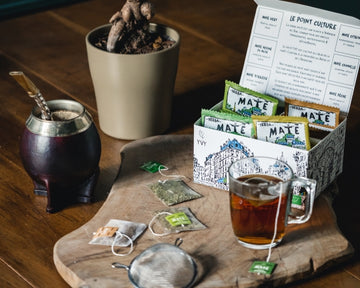
The many ways to enjoy mate - in tea bags, in a mate gourd or with a tea infuser - let everyone fold the plant into their routine.

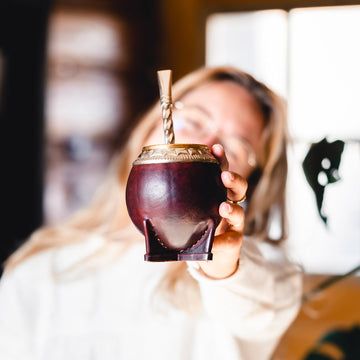
Enjoying mate in a mate cup
In short: an organic yerba dried without smoke, water between 70 and 80°C and sensible consumption, and mate can be enjoyed with complete peace of mind.
Also worth reading
- The benefits of mate
- Pesticide Alert: Which Mate Brands to Avoid and How to Choose Well
- Barbacuá mate: a dangerous traditional drying method?
Sources: EFSA, caffeine (2015 scientific opinion); IARC/WHO, press release no. 244 of 15 June 2016 on coffee, mate and very hot beverages.
Frequently asked questions
Is mate bad for your health?
Is mate carcinogenic?
Where does the comparison between mate and cigarettes come from?
Want to taste an exceptional organic mate?
Discover our yerbas, sourced directly from our partner growers committed to agroforestry, and certified organic.
Discover the shopRead next

Starting Mate: Which Mate to Choose for Your First Time?

Wooden Mate Gourds (Carob, Palo Santo): The Guide to Proper Curing
