


The Dangers of Tea Bags: Should You Be Worried?
 Alexis · Founder of YVY Maté
Updated on
3 min read
Alexis · Founder of YVY Maté
Updated on
3 min read

Key takeaways
- Nylon and PET tea bags release billions of microparticles into hot water
- A daily brew multiplies exposure — the container matters as much as the content
- Corn starch tea bags, 100% plant-based, eliminate the problem at the source
- Always check the bag's material: "silky" or "pyramid" often rhyme with plastic
A study calls into question nylon and PET (petroleum-based plastic) tea bags, responsible for releasing billions of plastic microparticles during brewing.
How can these plastic microparticles affect our health? Are there alternatives to tea bags containing plastic?
The study
On September 25, 2019, a Canadian study was published to raise awareness among tea and infusion drinkers.
When a nylon or PET bag is brewed, ACS Environmental Science & Technology reveals, billions of microparticles and nanoparticles are released.
The researchers analyzed four bags from different tea brands. Simply steeping a single plastic tea bag at brewing temperature (95°C) releases around 11.6 billion microplastics and 3.1 billion nanoplastics into one cup of tea. All invisible to the naked eye, of course.
Moreover, the higher the temperature, the more plastic the bag releases.
Brewed with room-temperature water, it releases 300 times fewer plastic particles.

Micro- and nanoplastics released in 95°C water
Yes - it's rather shocking to learn we're taking in billions of plastic particles without seeing or knowing it, while this remains the "norm" among tea bag producers.
For now, the impact and consequences of plastic particles on the human body remain unknown. The WHO (World Health Organization) has in fact called for in-depth studies to be carried out.
Pending those results, the Canadian study's authors recommend avoiding plastic tea bags (nylon or PET), to steer clear of any health risk. A vigilance that echoes our own regarding pesticide residues in mate.
What are the alternatives to plastic tea bags?
As we've seen, some bag types release toxic particles.
We've drawn up a rundown of each bag type to make your choice easier on your next infusion purchases!
The paper tea bag
It's the oldest bag type. Its very low price drove the mass popularization of tea and bagged infusions.
Its aroma retention is decent, but its brewing less so: aroma diffusion is hampered by the paper, creating an unpleasant aftertaste.
Beware of this bag type - most are chlorine-bleached.
Our recommendation: avoid.
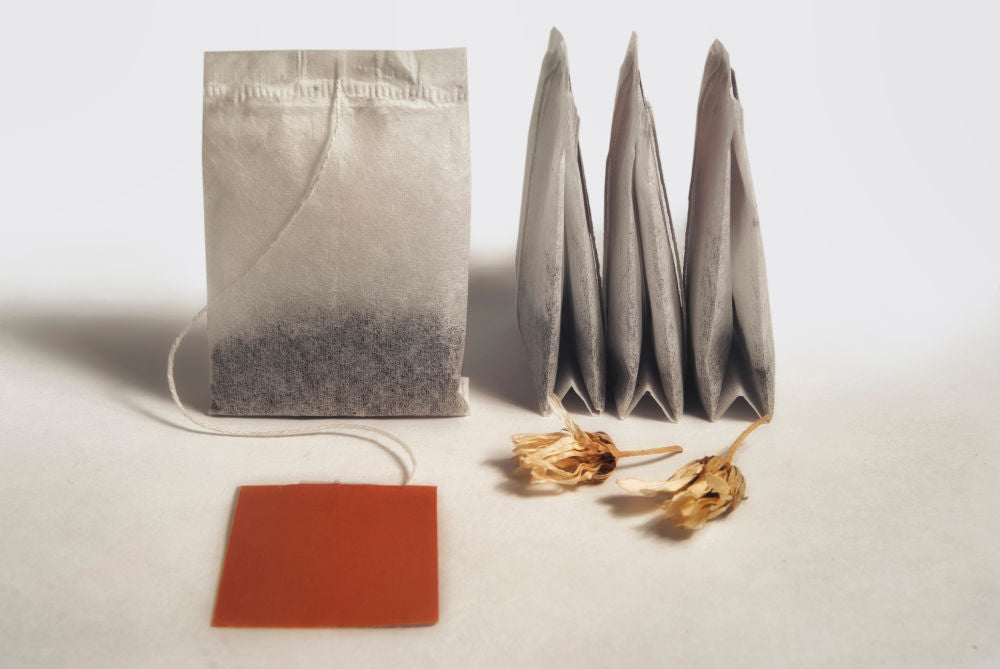
Paper tea bag
The nylon tea bag
To get around the paper bag's aroma drawbacks, a great many producers and packers turned to nylon bags, which diffuse the infusion's aromas far more effectively thanks to better water circulation.
Beware: as seen above, these bags release a large quantity of plastic particles.
Our recommendation: rule out entirely.

Nylon tea bag
The muslin tea bag
Several muslin types exist today: cotton muslin bags, nylon ones, or more rarely, silk.
Muslin has many advantages, like good aroma retention and diffusion. A muslin bag lasts longer than a paper one.
We do advise paying close attention to the muslin type when you buy. Most aren't compostable - be sure to check the muslin's material. If the material isn't stated, it's most likely nylon.
Our recommendation: check the muslin's material.

Muslin tea bags
The corn starch tea and mate bag
These innovative bags are 100% natural.
Made from plant matter, they're far safer to use: no plastic, no staples, no microparticles. At last!
Sturdy, durable and diffusing aromas perfectly - so this is the solution we chose for producing our mate tea bags.
Our recommendation: your best pick.

Corn starch mate tea bag
Loose-leaf tea and mate
One last, highly relevant alternative to bagged infusions is of course loose-leaf brewing!
Whether in a tea infuser, teapot, coffee maker or mate gourd, there's a multitude of brewing methods to fully enjoy a tea or a mate.
We suggest our 80 g format, ideal for discovering mate in a small size - and why not sample several mate types!
Our 80 g infusion range lends itself perfectly to discovery: Green Mate, Mint Mate or Lemon-Ginger Mate — plenty to compare flavors without committing to a large format.
Frequently asked questions
Do tea bags contain plastic?
How do you avoid microplastics in your infusions?
What are YVY Maté tea bags made of?
Want to taste an exceptional organic mate?
Discover our yerbas, sourced directly from our partner growers committed to agroforestry, and certified organic.
Discover the shopRead next

Starting Mate: Which Mate to Choose for Your First Time?

Wooden Mate Gourds (Carob, Palo Santo): The Guide to Proper Curing
