


Mate: A journey into its history and origins
 Alexis · Founder of YVY Maté
Updated on
2 min read
Alexis · Founder of YVY Maté
Updated on
2 min read

Key takeaways
- The Guaraní were already drinking mate leaves long before the Europeans arrived
- The Jesuits domesticated mate farming in the 17th century and launched its trade
- Now the national drink of Argentina, Paraguay and Uruguay, it sets the rhythm of social life
- Today mate is winning over Europe — closing a five-century loop
Mate, South America's emblematic drink, is far more than a simple infusion. It embodies a rich cultural heritage, blending ancestral legends, ritual traditions and economic forces.
Let's explore its origins, its evolution, and the importance it still holds today.
The history of mate

The beginnings of yerba mate plantations
The story of yerba mate begins in South America, at the heart of the Guarani people, an Amerindian population spread across regions of Brazil, Argentina, Paraguay, Uruguay and Bolivia.
According to Guarani tradition, yerba mate leaves were chewed or brewed in a gourd. The plant's natural virtues helped its drinkers withstand the harsh climate and fatigue. It was notably used on long journeys across the Andes, or while moving herds.
More than a mere beverage, yerba was a true ritual in Guarani culture. The tree was sacred, regarded as a gift sent by the gods. Beyond its many nutritional and medicinal benefits, it was a spiritual element of Guarani culture.
Mate, or "Jesuit tea"
In the 16th century, with the arrival of the Jesuits, mate tea took on a whole new dimension and opened up to the rest of the world. Its production became organized and intensified under the missionaries' control, allowing them to grow wealthy.
The Jesuits then spread its use across the conquistadors' territory - but they drank the mate leaves in small bags. That's why it's often called Jesuit tea.

The Guarani legend
Many tales helped forge yerba mate's solid reputation. Moreau de Tours, then a physician famous across Europe, recounted a story that fed the legend: explorers were said to have survived more than a week in the forest feeding solely on yerba leaves*.
Back on the European continent, the Jesuits praised mate as a miraculous drink that could chase away fatigue and bring good spirits all day long.
They also undertook in-depth research on the plant. That research revealed the secrets of growing yerba mate - which, unfortunately, vanished just as quickly.
It became clear that mate can only thrive in certain regions of South America. Only later, in the course of the 20th century, did new techniques emerge that allowed the shrub's cultivation to be adapted as we know it today.
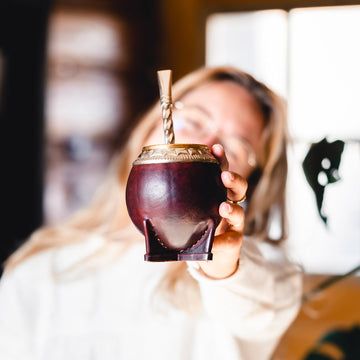
From the 17th century onward, the Spanish gradually adopted the leaves, most often in the traditional way, with a mate gourd and a bombilla.
*Source: "Le Maté, étude historique, chimique et physiologique." A. Moreau de Tours - 1908
Mate, South America's emblematic drink

Ilex paraguariensis, or mate
A member of the holly family, yerba mate is endemic to central South America. To fully develop, the shrub needs high humidity, a particular altitude and very fertile soil - which is why it is mainly grown in Argentina, Paraguay and southern Brazil.
The extraordinary properties of this infusion, and its role as a driver of social connection, make it popular well beyond these 3 countries.
Indeed, yerba is hugely popular in Syria and Lebanon (particularly among the Druze community), with a combined consumption of 42,000 tonnes. The plant's consumption spread and grew in the 19th century through the many waves of emigration to Argentina, Bolivia and Uruguay.
Today the plant is widely enjoyed around the world, at home as much as in the workplace.
We've committed to growing organic mate to bring you the finest infusion quality!
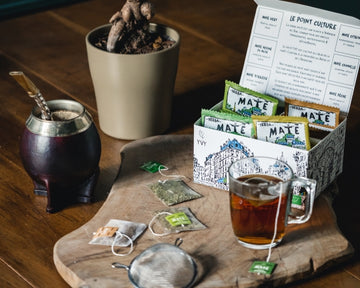
And if you'd like to carry on the tradition yourself, our complete kits gather everything the ritual requires: the Discovery Mate Kit, Ceramic Kit, Torpedo Kit or Termolar Stainless Steel Kit – and for tea-bag lovers, the 42-Bag Discovery Set.
Frequently asked questions
Who discovered mate?
What role did the Jesuits play in the history of mate?
Why is mate so important in South America?
Want to taste an exceptional organic mate?
Discover our yerbas, sourced directly from our partner growers committed to agroforestry, and certified organic.
Discover the shopRead next

Starting Mate: Which Mate to Choose for Your First Time?

Wooden Mate Gourds (Carob, Palo Santo): The Guide to Proper Curing
