


Matcha vs. Mate: Which Drink is Better for Your Health
 Alexis · Founder of YVY Maté
Updated on
3 min read
Alexis · Founder of YVY Maté
Updated on
3 min read

Key takeaways
- Two plants, two worlds: South American holly for mate, ground Japanese tea for matcha
- Matcha is whisked and drunk whole; mate is steeped and re-steeped through the bombilla
- On energy: L-theanine gentleness for matcha, caffeine-tannin endurance for mate
- On price, mate wins by far: a gourd costs just a few cents of yerba
Mate and matcha are two stars of the wellness-drink world. So which one to choose? It all depends on what you're after! There are several points where one takes the lead over the other - and vice versa.
The key takeaway: both plants are true allies for our health, our body and our mind. But they don't have quite the same strengths.
Deep down, what really sets mate and matcha apart? What do they taste like? And what benefits can you expect from mate?
The origins of these body-and-mind infusions
Matcha's origins reach back to medieval China. For practicality, tea was packed into dry bricks.
To prepare it, a piece was broken off the brick, and the powder that fell was whisked into hot water with a small bamboo whisk until fully dissolved.
Over time - and under Buddhism's growing influence - this way of drinking tea spread, gradually becoming a sacred ritual.
Matcha comes from the tea plant (Camellia sinensis). Its carefully picked leaves are ground into an ultra-fine powder.
Its preparation remains true to tradition today:
- Add a little hot water to the matcha powder
- Whisk vigorously with a small bamboo whisk, tracing an "M", until the texture is smooth and lightly frothy.

Preparing matcha
Mate comes from a whole other universe. It's derived from a tree of the holly family, Ilex paraguariensis. Drunk for millennia by the Guarani people, mate was considered a sacred infusion, both energizing and invigorating.
As with any good tea, we strongly recommend going for organic mate (and organic matcha too, for that matter!).
Why? Because organic mate protects you from the pesticide residues and other chemicals unfortunately found in some conventional farming. And if you're after a good organic mate, you'll find it right in our online store.
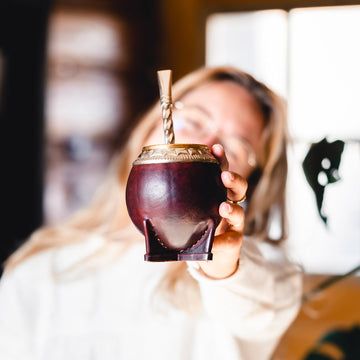
The drink was popularized by the Spanish colonists, who kept the traditional preparation method: it's enjoyed in a gourd (the famous mate calabash), with a bombilla, a metal straw that doubles as a filter.
Despite very different geographic origins, matcha and mate share a few things: a preparation all their own, an interesting caffeine content, a fine wealth of antioxidants, and above all a stimulating effect on both body and mind.
But beyond these similarities, the two infusions also differ quite a bit, in taste as in benefits. More on that just below!
Mate's strong points

A mate gourd
Yerba mate is a formidable plant. It contains theobromine as well as theophylline. Combined, these two alkaloids bring a feeling of calm and joy - unlike caffeine alone, which tends to provoke jitters and edginess.
Compared to matcha, one of mate's benefits is its superior energizing power. Mate leaves are very low in calories, bring a feeling of fullness and aid digestion. We warmly recommend mate for anyone looking to avoid snacking between meals!
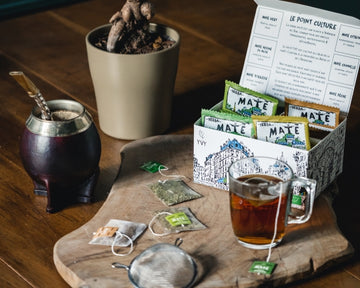
Ready to try mate? Our kits gather the essentials to get started: the Discovery Kit, the Ceramic Kit or the Torpedo Kit.
Matcha's strong points
Matcha is quite complete on the health front too! It holds many minerals and vitamins, such as potassium, zinc and vitamin C.
Its antioxidants also help fight bad cholesterol and support heart health. The L-theanine in green tea leaves has a calming effect and promotes concentration.
You won't feel caffeine's bad side - the jitters or trembling one can hold against espressos.
Matcha can also support weight management - alongside, of course, healthy balanced eating and regular exercise. One of matcha's advantages is its powdered form: it can be enjoyed in cakes, used in facial care recipes and more.
The difference: mate's taste vs matcha's

The differences between mate and matcha
Matcha green tea and mate are well known for their characteristic flavors - which can scare off novices tasting their first cup of matcha or first gourd of mate.
Mate's taste is marked by a characteristic bitterness, matcha's by a very herbal flavor. Note that both come in several quality grades: a superior quality means a smoother, more complex final flavor that suits most palates more easily. Feel free to read our article "4 factors that influence organic mate's taste" on the subject!
Matcha or mate, you'll be delighted by both infusions' virtues. So there's only one thing to do: try both!
Frequently asked questions
What is the difference between mate and matcha?
Mate or matcha: which one gives you more energy?
Is mate cheaper than matcha?
Want to taste an exceptional organic mate?
Discover our yerbas, sourced directly from our partner growers committed to agroforestry, and certified organic.
Discover the shopRead next

Starting Mate: Which Mate to Choose for Your First Time?

Wooden Mate Gourds (Carob, Palo Santo): The Guide to Proper Curing
