


Tea or Mate? The Essential Differences
 Alexis · Founder of YVY Maté
Updated on
3 min read
Alexis · Founder of YVY Maté
Updated on
3 min read

Key takeaways
- Mate is not a tea: Ilex paraguariensis has nothing to do with Camellia sinensis
- On caffeine, mate dominates: 80 to 175 mg per cup versus 15 to 60 mg for tea
- Tea is drunk from a cup and a bag; mate is shared from the gourd and refilled
- Two complementary pleasures: tea's delicacy, mate's energy and ritual
Tea and mate are two popular drinks with similar characteristics and properties - yet different in several ways. People often assume mate belongs to the tea family, but not at all!
Let's look at the main differences between tea and mate. Where do the two plants come from? What are their properties? How do their tastes and preparation methods differ?
The origins of tea and mate
Tea originates from China and has been drunk for over 4,000 years. According to legend, tea was discovered by the Chinese emperor Shen Nong, regarded as the father of Chinese agriculture and medicine. One day, as he drank hot water, tea leaves fell into his cup and steeped in the water - and tea was born.
Tea quickly became very popular in China and was introduced to other Asian countries, notably Japan, Korea and India. It is now drunk worldwide and ranks among the world's most popular beverages.
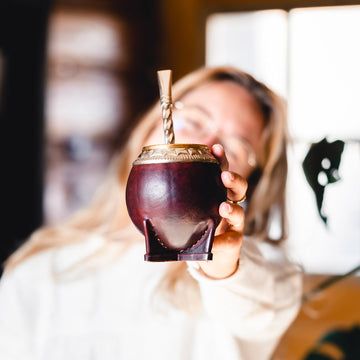
Mate has been drunk by indigenous peoples across South America for centuries, becoming particularly popular in Argentina, Paraguay and Brazil. It's usually drunk from a gourd called a "mate", and is often shared among friends or family at social gatherings.
Tea and mate: two different plants
Tea is made from the leaves of the Camellia sinensis plant, while mate comes from the leaves of Ilex paraguariensis.
Camellia sinensis is a species of the tea family (Theaceae), native to East Asia. It's an evergreen shrub that can grow several meters tall. It is grown mainly to produce tea, obtained from its leaves, dried and steeped in hot water.
There are several varieties of Camellia sinensis, differing in taste, aroma and the growing conditions they suit. The sinensis variety is grown mainly in China and India, for instance, while the assamica variety is grown mainly in India and East Africa. Both varieties' leaves are used to make different types of tea, such as green tea, black tea and oolong.

Tea plantation
Ilex paraguariensis is a shrub or small tree of the Aquifoliaceae family, native to South America. The tree is commonly called "mate", "yerba mate" or "mate tea". It is grown mainly in Argentina, Paraguay and Brazil for its leaves, and is endemic to the region.

Mate plantation
Taste and aroma of tea and mate
Tea and mate taste quite different. Tea generally has a subtler, more delicate taste, with aromatic notes that vary by tea type and production method.
Mate, by contrast, tends to have a taste that's more robust and earthy. It can carry hazelnut or chocolate notes, or lean very herbal, depending on the brand, production methods and mate type. Mate is also often associated with a flavor that can be a little bitter.
In general, tea is seen as more refreshing, while mate is often perceived as more energizing and stimulating.

Mate brewing in a gourd
Preparation method
Mate is an infusion made from the leaves of the Ilex paraguariensis shrub, which grows mainly in South America. To prepare mate:
- First, heat water to between 70 and 80 degrees Celsius.
- Then place the mate leaves in a calabash known as a "gourd" and pour in the hot water.
- Let it steep a few minutes, then drink the brew through a filtered straw called a "bombilla".
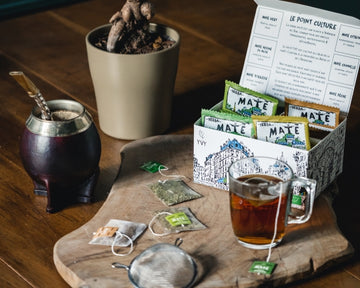
Mate can also be prepared just like a tea - by steeping a tea bag in a cup, for example.
Tea, meanwhile, is an infusion made from tea plant leaves (Camellia sinensis). To prepare tea, dried leaves are used:
- Start by heating water to around 70-80 degrees Celsius (it all depends on the tea type)
- Add the tea leaves or tea bags to a teapot or cup.
- Let it steep for a few minutes
- Drink the brew, or pour it into another cup to drink. Steeping time can vary with the tea type and personal taste.
There are many variants of tea and mate, with varied flavors and aromas. Both can be prepared with or without sugar, and with or without milk, to each person's preference.
Properties of tea and mate
Tea and mate are both known for their stimulating properties, but mate contains a higher amount of caffeine than tea.
Tea generally contains less caffeine than mate, though it depends on the tea and mate varieties used and the preparation. Tea can hold between 15 and 60 mg of caffeine per cup, while mate can hold between 100 and 175 mg.
Feel like trying mate? Discover our selection of organic yerba mate, unsmoked and sourced directly from the growers.
Frequently asked questions
Is mate a tea?
Does mate contain more caffeine than tea?
Can you prepare mate like a tea?
Want to taste an exceptional organic mate?
Discover our yerbas, sourced directly from our partner growers committed to agroforestry, and certified organic.
Discover the shopRead next

Starting Mate: Which Mate to Choose for Your First Time?

Wooden Mate Gourds (Carob, Palo Santo): The Guide to Proper Curing
